
Bartender Ergonomics: Designing High-Performance Commercial Bars
The following ergonomic principles are adapted from Bar Design Essentials, by Tobin Ellis, a pioneer in ergonomic bartender-centric bar design for more than 20 years.
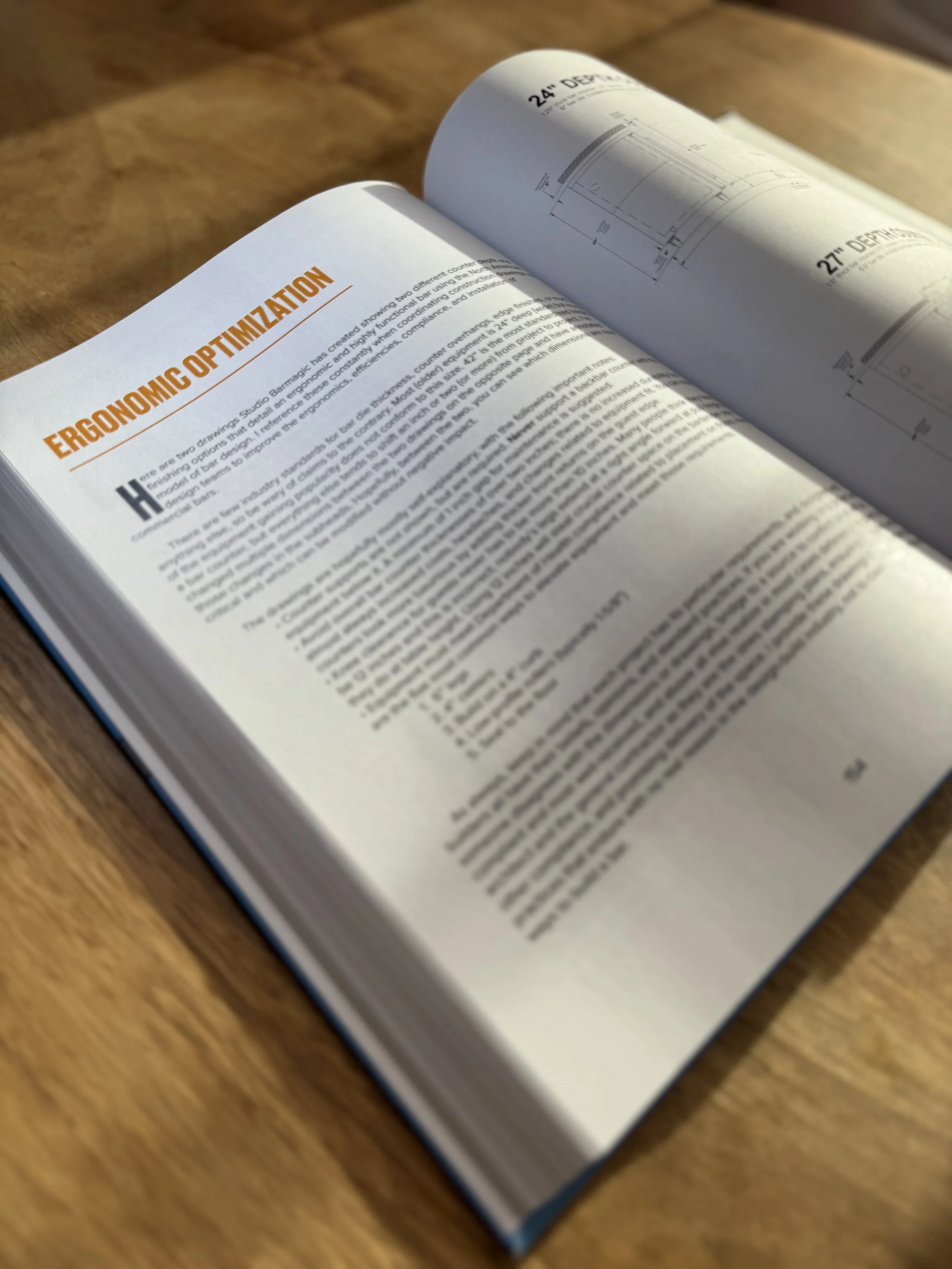
Ergonomic optimization from Bar Design Essentials, by designer Tobin Ellis.
→ What are the four pillars of authentic ergonomic bar design?
Bars expertly designed by ergonomic specialists focus on putting the bar team into zero-step, neutral-spine, neutral-reach, and flow state. These are not marketing words, they are scientific, biomechanical realities we began applying to bar design nearly 20 years ago. You want the bartenders all on autopilot, pumping out perfect cocktails and ringing through the roof while their brains are engaging guests to build a loyal clientele and make the party. This is the job of a bartender. Design bars that help them excel at their actual job: being fast while being present with the guest. Do not force them to choose one or the other. Bartending is everything, everywhere, all at once. Beautiful bar designs understand this and equip the bartenders to make everything and see everywhere, so they can engage everyone all at once. Learn the principles, practices, and dimensions of ergonomic bar design in Bar Design Essentials.
→ Why do bartender ergonomics matter so much?
Every veteran bartender has scars, injuries, and ailments they picked up courtesy of their life behind the wood. And mostly—if not completely—because of poor design that ignores the very people who use it most. No matter what a bar looks like or how famous it is, it is not a beautiful bar if it is forcing bartenders to regularly injure themselves, even slightly, just to operate it. This informs our design ethos and process and hopefully yours, too. If the bartenders can’t work it efficiently and in a manner that is healthy, the design does not leave our studios. How bars are built should always start with the bartender’s experience, not the guests’. This is not revelatory; it is how it should have always been.
→ Why do most bar drawings fail to deliver true ergonomics?
Plan and section views of bars are mostly drawn by people who don’t understand what it actually means to tend bar. They occasionally include a sketch of a poorly-scaled human outline reaching up or forward in a hyper-extended position. The problem, of course, is bartenders should not (and mostly do not) work with hyper-extended limbs, reach to the floor to perform their job, or work with single-row bottle risers. That is why Studio Barmagic delivers a balance of construction reference documents and accurate anthropometric drawings of the way bartenders really move behind a bar. The goal of bar design is optimizing for the humans on both sides of the bar. Before you hand someone the awesome responsibility of designing your next bar, ask yourself one simple question: are they CAD or spec experts or bartending and operations experts who also understand design and construction?